Feeling like your home and wallet are drowning in clutter? You’re not alone. Decluttering your life and cutting financial waste isn’t just about tidying up—it’s about reclaiming control over your space and your spending. In this simple guide, you’ll discover no-nonsense, actionable steps to clear the physical and digital mess that’s quietly draining your bank account. Ready to stop wasting money on unused stuff, sneaky subscriptions, and impulse buys? Let’s dive in and start saving hundreds—or even thousands—while making your life feel lighter and more manageable.
Why Clutter Is Secretly Draining Your Bank Account
You might think clutter is just an eyesore, but it does way more damage—especially to your wallet. When you own too much stuff, the costs add up in ways you don’t always notice. Think storage fees for that extra unit in the garage, the time and money spent replacing things you can’t find, and the hidden maintenance or cleaning expenses. Even the mental clutter leads to spending more because you forget what you have and buy duplicates.
Here’s the kicker: the average household wastes between $1,500 and $3,000 every year on unused items, forgotten subscriptions, and hidden fees. That’s cash literally slipping through your fingers thanks to stuff gathering dust.
Physical clutter and financial clutter feed off each other. When your home is cluttered, your finances often become a tangled mess of recurring bills, impulse buys, and financial “phantoms” that drain your bank account silently. Decluttering isn’t just about creating space—it’s the first step to stopping these money leaks and reclaiming control over your finances.
Ready to cut unnecessary expenses and save? Let’s dive into how to declutter fast and keep those financial leaks sealed tight.
Step 1 – Declutter Your Physical Space (The 7-Day Rapid Reset)

Start by tackling your home one area at a time with this quick 7-day plan. It’s simple, clear, and designed to cut unnecessary expenses by clearing out stuff you don’t need.
Day 1: Clothes & Wardrobe Audit
Use the 90/90 rule—if you haven’t worn it in 90 days or don’t see yourself wearing it in the next 90, it’s time to let it go. Try Project 333: keep just 33 items of clothing for 3 months to simplify your wardrobe and save money.
Day 2: Kitchen & Pantry
Check for food waste by going through expiry dates and tossing what’s gone bad. Clear out duplicate tools and gadgets—two peelers or three spatulas just take up space and cash.
Day 3: Paper, Mail, and Important Documents
Sort through piles of mail and papers. Recycle what’s old or no longer needed and organize what you must keep—it helps reduce clutter and lets you focus on finances better.
Day 4: Bathroom, Toiletries, and Expired Products
Clear out expired lotions, makeup, and medicines. Keeping only what you use saves space and stops you from buying more stuff you don’t need.
Day 5: Kids’ Toys, Books, and Sentimental Items
Sort through kids’ stuff and books. Keep favorites and donate or sell things they no longer use. When it comes to sentimental items, be selective to avoid unnecessary clutter.
Day 6: Garage, Storage, and “Maybe Someday” Boxes
Dig into storage areas and those boxes labeled “maybe someday.” Be honest—if you haven’t used it in a year, chances are you won’t. Clearing these frees up room and halts money wasted on storing stuff.
Day 7: The Big Sell / Donate / Free-Cycle Sprint
Now, move your cleared items out fast. Use online platforms, local groups, or donation centers to get rid of clutter. Turning things into cash or passing them on cuts financial waste and feels great.
This step-by-step reset helps you declutter home fast while setting you up to save money and stop financial leaks.
Step 2 – Turn Your Clutter into Cash (Without the Hassle)
Selling your unwanted items is one of the smartest ways to cut unnecessary expenses and declutter while adding some extra money to your budget. Here’s how to do it easily and effectively.
Best Platforms for 2025–2026
Choose platforms that fit what you’re selling and your local community:
- General goods: Online marketplaces like eBay and Facebook Marketplace are popular and easy to use.
- Fashion & accessories: Try Depop, Vinted, or Poshmark for clothes, shoes, and accessories.
- Local groups: Buy Nothing groups and local selling apps make it easier to avoid shipping hassles and meet buyers nearby.
Pricing Cheat Sheet for Fast Sales
- Price items slightly below average market value to attract faster buyers.
- Bundle smaller or similar items together for better deals.
- Be clear about condition — upfront honesty speeds up the process.
- Use recent similar listings as a pricing guide.
Tax-Free Limits and When to Donate Instead
Selling personal items occasionally is usually tax-free, but if you’re turning a big side hustle, keep track for tax purposes. If selling feels like a headache or won’t cover your effort, donating can be a better option:
- Donated items often qualify for tax deductions—just save receipts.
- Donation clears space quickly and supports community causes.
- Avoid hoarding items just to sell; keep your money-saving momentum going.
Turning clutter into cash helps stop financial leaks and supports a simple, waste-proof lifestyle. Keep it straightforward, and you’ll see results fast.
Step 3 – Declutter Your Digital Life and Recurring Bills
Digital clutter and sneaky subscriptions add up fast, quietly draining your bank account. Spend just 15 minutes on a quick subscription and app audit using tools like Rocket Money, Truebill, Bobby, or Trim. These apps scan your accounts and highlight recurring charges you might have forgotten about.
Use a simple cancel-and-rebuy vs. keep decision matrix to decide which subscriptions are worth keeping. Ask yourself:
- Do I use this enough to justify the cost?
- Can I pause or downgrade it instead of canceling?
- Is there a free or cheaper alternative?
Common culprits are streaming services, gym memberships, software apps, and beauty box subscriptions. Most people keep only one or two streaming services and gym memberships they actually use, while cutting out extras that don’t add value.
Finally, tackle your email inbox zero by unsubscribing from all those marketing emails and newsletters cluttering your space. This not only cuts digital noise but also stops temptation for unnecessary spending.
By cleaning up your digital life and canceling unused subscriptions, you can cut unnecessary expenses and stop hidden money waste fast.
Step 4 – Stop the 12 Biggest “Invisible” Money Leaks
Cutting unnecessary expenses means spotting hidden money waste that quietly drains your wallet. Here are the top 12 invisible financial leaks to watch out for:
-
Phantom electricity & always-on devices
Devices left plugged in or on standby keep nibbling at your power bill. Unplug what you don’t use daily.
-
Grocery impulse buys & food waste
Buying extras you don’t need and throwing away spoiled food is like flushing money down the drain. Plan meals and shop smart.
-
Unused gift cards & store credits
That forgotten $20 gift card? It’s cash, so use it or lose it.
-
Bank & credit-card fees
Monthly fees, overdrafts, and late payments add up fast. Review your accounts to avoid unnecessary charges.
-
Auto-renewing insurance policies
Insurance plans renewing automatically often lead to overpaying. Shop around before renewal.
-
Overpaying for phone plans & internet
Are you paying for data or speed you don’t need? Downgrade plans to match your real usage.
-
Coffee, lunch, and “small” daily treats
Small daily spends feel harmless but can total hundreds each month. Brew coffee at home and pack lunches to save.
-
Duplicate streaming & software subscriptions
Multiple subscriptions for streaming or apps often overlap. Cancel extras and keep just what you use.
-
Late payment fees & minimum balance traps
Missing bill dates or low balances trigger fines. Set reminders and keep a buffer to avoid these costs.
-
Buying storage instead of decluttering
Renting storage units or buying containers to hide clutter only delays the problem and racks up bills.
-
Replacing instead of repairing
Fixing things saves money. Resist the urge to toss and replace unless it’s really time.
-
Shopping as entertainment
Shopping out of boredom often leads to impulse buys and clutter. Find free or low-cost activities instead.
Stopping these invisible leaks is key to declutter and save money more effectively. Cut these out to boost your financial health.
The 30-Day “No-Spend Reset” Challenge (With Printable Tracker)
Trying a no-spend challenge can seriously cut unnecessary expenses fast. Here’s a simple 30-day plan with rules that actually work—no gimmicks, just real savings.
Rules That Actually Work
- Only spend on essentials: Think rent, utilities, groceries (but no extras).
- No “fun” purchases: Skip eating out, clothes, gadgets, and impulse buys.
- Use cash or a separate card: Helps avoid accidentally overspending.
- Plan your meals and errands: Stops impulse trips and food waste.
- Track every penny: Use a printable tracker to see where your money goes.
Allowed vs. Forbidden Categories
Allowed:
- Rent/mortgage, utility bills
- Food basics (no snacks or takeout)
- Medicine & emergencies
- Transportation to work/school
Forbidden:
- Dining out, coffee runs
- New clothes or gadgets
- Subscriptions (unless essentials)
- Entertainment and hobbies
Handling Social Pressure and Boredom
- Tell friends/family your plan: Helps reduce pressure to spend socially.
- Find free activities: Walks, reading, online events.
- Use boredom as a trigger to declutter: Less to buy and more space to enjoy.
- Remember your goal: Cutting financial waste means more freedom later.
This challenge clears both your wallet and space by stressing the one-in-one-out rule and stopping shopping as entertainment. It’s the fastest way to reboot your spending habits and declutter your life for good.
Build a Clutter-Proof, Waste-Proof Lifestyle
To keep clutter and financial waste from creeping back in, it’s all about creating smart habits that stick.
One-in-one-out rule
For every new item you bring in, get rid of one old thing. This keeps your space balanced and stops unnecessary spending. Variations include only adding something if you’ve truly used or loved the item you’re replacing.
48-hour cooling-off rule
Avoid impulse buys by waiting 48 hours before purchasing anything non-essential. This simple pause helps cut unnecessary expenses and reduces emotional spending.
Create a “buy list” and a 12-month wishlist folder
Keep a running list of items you really need or want. Separate your immediate buys from longer-term wishes. This helps prevent random purchases and keeps your budget on track.
Schedule annual declutter weekends
Block out time yearly to clear out clutter and reassess what you own. Regular resets make it easier to maintain a clutter-free, financially healthy home.
Teach kids minimalism without deprivation
Show children the value of owning less without making it feel like a punishment. Focus on quality over quantity and involve them in decluttering fun to build lifelong habits.
By sticking to these simple but effective lifestyle rules, you’ll protect your space and your wallet from hidden money waste and keep your financial clutter under control.
Real-Life Results: How Much Readers Actually Saved
Seeing real numbers can be powerful, so here’s what some readers achieved by following these simple declutter and money-saving steps:
- Family of 4: Saved around $4,800 in their first year by cutting unnecessary expenses, decluttering physical and digital spaces, and stopping hidden money leaks.
- Single 29-year-old: Managed to save $2,900 by doing regular subscription audits, decluttering wardrobe and home fast, and joining a no-spend challenge.
- Side-hustle reseller: Made an impressive $7,200 in a year by selling clutter online quickly and using smart pricing strategies.
On average, most people save between $1,200 and $2,500 in just the first 90 days. These results show that decluttering isn’t just about a clean home—it’s a straightforward way to cut financial waste and build lasting savings.
Your 30-Day Declutter + Money-Saving Action Plan (Checklist)
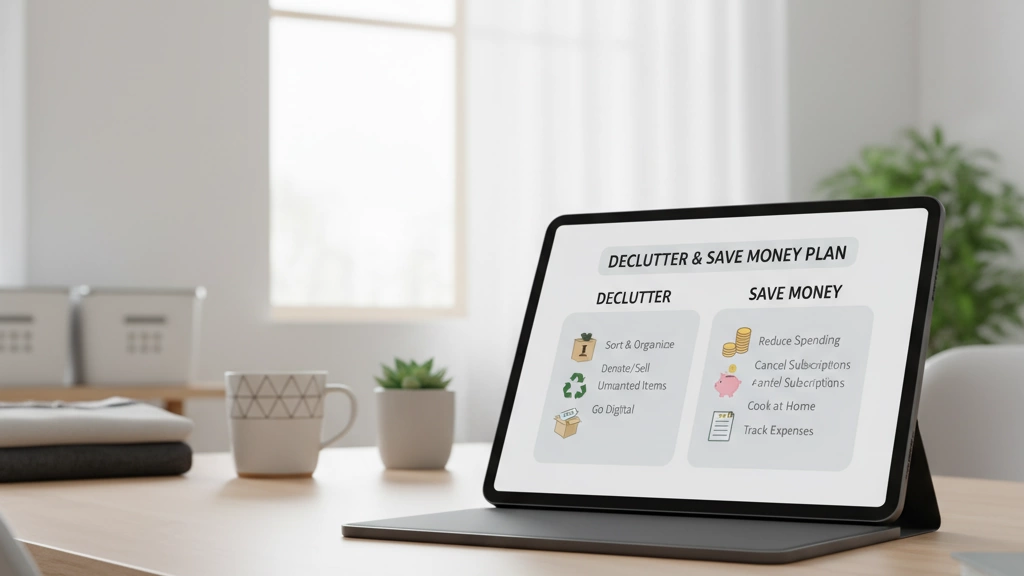
To make decluttering and cutting financial waste easy, follow this printable and downloadable PDF checklist. It breaks down the process week by week, so you stay on track without feeling overwhelmed.
Week 1: Quick Wins
- Declutter clothes using the 90/90 rule.
- Clean out expired food and duplicate kitchen tools.
- Sort through mail and paperwork; toss what you don’t need.
Week 2: Deep Dive
- Tackle bathroom items and expired toiletries.
- Organise kids’ toys, books, and keepsakes.
- Sort garage, storage, and “maybe someday” boxes.
Week 3: Sell, Donate, Recycle
- List items on best platforms for fast sales.
- Price items to sell quickly.
- Drop off donations or arrange free-cycle pickups.
Week 4: Digital & Financial Cleanup
- Audit subscriptions using tools like Rocket Money or Truebill.
- Cancel or keep apps and services based on actual use.
- Zero your email inbox with an unsubscribe blitz.
- Identify and stop hidden money leaks.
By following this simple, week-by-week plan, you’ll cut clutter and save money faster than you think. Keep your checklist handy to track progress and celebrate small wins!
Frequently Asked Questions
How is decluttering different from minimalism?
Decluttering is about clearing out stuff you don’t need right now—it’s a quick way to cut unnecessary expenses and organize your space. Minimalism, on the other hand, is a lifestyle choice focused on keeping only what adds value to your life long term. Think of decluttering as a first step toward financial minimalism, but you don’t have to become a minimalist to see savings.
What if my partner refuses to declutter?
This happens a lot. Start by decluttering your own space and sharing how much money you’re saving. Sometimes seeing results sparks interest. Avoid pressure—invite your partner to make small decisions, like a 7-day reset on shared areas. Focus on teamwork, not control.
Is it worth selling items under $20?
Yes, but be smart. Selling small items helps declutter your home fast and can add up over time. Use platforms like Facebook Marketplace or local Buy Nothing groups to avoid fees and hassle. If the selling process costs more time or money than the item’s worth, donating might be better.
How do I stop emotional spending after decluttering?
Emotional spending often fills the gap left by empty shelves or quiet drawers. To avoid this:
- Use the 48-hour cooling-off rule before buying.
- Keep a buy list and a 12-month wishlist folder to track what you really want.
- Remember your why—financial freedom and less waste.
- Replace shopping with low-cost habits like walking or reading.
By pairing declutter habits with these tips, you stop money leaks and build a clutter-proof, waste-proof lifestyle.