
Can you contribute directly to a Roth IRA if you earn more than $161,000 (single) or $240,000 (married filing jointly) in 2026? No. The IRS income limits block you. But a Roth IRA conversion offers a legal workaround. You move money from a Traditional IRA (or 401k) into a Roth IRA and pay taxes on the amount converted. Done right, future growth and withdrawals are tax-free. Done wrong, you get a surprise tax bill that stings for years.
This guide covers the exact steps, the tax math, the common traps, and when you should skip the conversion entirely.
How the Roth IRA Conversion Actually Works (The Tax Math)
You move pre-tax retirement money into a post-tax Roth account. The IRS treats the converted amount as ordinary income in the year you do it. That means it stacks on top of your salary, bonuses, and investment income.
Example: You earn $300,000 in 2026. You convert $50,000 from a Traditional IRA. Your taxable income becomes $350,000. At the 35% federal bracket (for single filers above $243,725 in 2026), you owe roughly $17,500 in federal tax on that conversion alone. State tax adds more.
Three things determine the real cost:
- Your current marginal tax rate. If you’re in the 37% bracket, every dollar converted costs 37 cents in tax now.
- Your expected future tax rate. If you expect to be in a lower bracket in retirement (say 24%), paying 35% today to avoid 24% later is a net loss.
- The size of the conversion. Converting $200,000 in one year pushes you into a higher bracket. Converting $20,000 a year for ten years keeps you in a lower bracket.
Verdict: A Roth conversion makes sense only if your future tax rate will be higher than your current rate. For most high earners, that’s true — tax rates are historically low, and future increases are likely. But run the numbers first.
The Pro-Rata Rule: The Trap That Wipes Out Your Plan

This is the single biggest mistake high earners make. The pro-rata rule applies if you have any pre-tax money in any Traditional IRA, SEP IRA, or SIMPLE IRA on December 31 of the conversion year.
How it works: The IRS does not let you choose which dollars to convert. If you have $100,000 in a Traditional IRA (all pre-tax) and you contribute $6,500 of after-tax money to a separate IRA, then try to convert only the $6,500 — the IRS says 93.9% of your conversion is taxable. ($100,000 / $106,500 = 93.9% pre-tax).
Real-world example: A doctor earning $400,000 wanted to do a backdoor Roth. She had $80,000 in a rollover IRA from a previous 401k. She contributed $7,000 after-tax and converted it. The IRS treated $6,560 of the conversion as taxable income. She owed about $2,300 in extra tax she didn’t plan for.
Solution: Roll your pre-tax IRA money into your current employer’s 401k before December 31. Most 401k plans accept rollovers from IRAs. This clears the pre-tax balance from your IRAs, and the pro-rata rule no longer applies. Fidelity, Vanguard, and Schwab all support this process.
| Scenario | Pre-Tax IRA Balance | After-Tax Contribution | Conversion Amount | Taxable Portion |
|---|---|---|---|---|
| No 401k rollover | $80,000 | $7,000 | $7,000 | $6,560 (93.7%) |
| After 401k rollover | $0 | $7,000 | $7,000 | $0 (0%) |
Verdict: If you have pre-tax IRA money and want to convert, roll it into a 401k first. Otherwise, don’t bother — the tax bill will ruin the strategy.
When a Roth IRA Conversion Is a Bad Idea
Not everyone should convert. Here are three situations where it costs you more than it saves.
1. You’ll need the money within 5 years. Roth conversions have a 5-year waiting period. If you withdraw the converted amount before 5 years, you pay a 10% penalty on the earnings. Converted principal can be withdrawn penalty-free after 5 years, but earnings still face penalties. If you might need that cash for a house or emergency, skip the conversion.
2. You’re in the 37% bracket and expect to retire at 24%. Paying 37% tax now to avoid paying 24% later is a guaranteed loss. Only convert if you expect future tax rates to be higher than 37% — possible, but not certain.
3. You have large capital loss carryforwards. If you have capital losses that offset ordinary income, you might convert in a year when your effective rate is lower. But if you have no losses and are in a peak earning year, wait for a lower-income year.
Verdict: Convert only when your current marginal rate is lower than your expected future rate. For most high earners in their 50s with large Traditional IRA balances, a series of small conversions over several years in early retirement (when income drops) is the optimal strategy.
Step-by-Step: Executing a Clean Roth Conversion in 2026

Here is the exact process for a high earner with no pre-tax IRA balance.
Step 1: Open a Traditional IRA. Use Fidelity, Vanguard, or Schwab. Fund it with after-tax dollars. The 2026 contribution limit is $7,000 ($8,000 if age 50+). You cannot contribute more than your earned income for the year.
Step 2: Wait 1-2 business days for the funds to settle. Do not invest the money. Keep it in the default cash/settlement fund.
Step 3: Convert the full balance to your Roth IRA. Click “Convert to Roth” in your brokerage account. Select the entire balance. This is a taxable event, but since the contribution was after-tax, only any earnings (usually $0-$2 if done quickly) are taxable.
Step 4: File Form 8606 with your tax return. This form tells the IRS that the contribution was non-deductible. Without it, the IRS assumes the conversion is fully taxable. Use TurboTax, H&R Block, or a CPA — they handle this automatically.
Step 5: Invest the money inside the Roth IRA. Now you can buy VTI, VOO, or any ETF or mutual fund. All future growth is tax-free if you wait until age 59.5.
Verdict: The process takes 15 minutes online. The hardest part is remembering to file Form 8606. Set a calendar reminder for tax season.
Alternatives to a Roth Conversion for High Earners
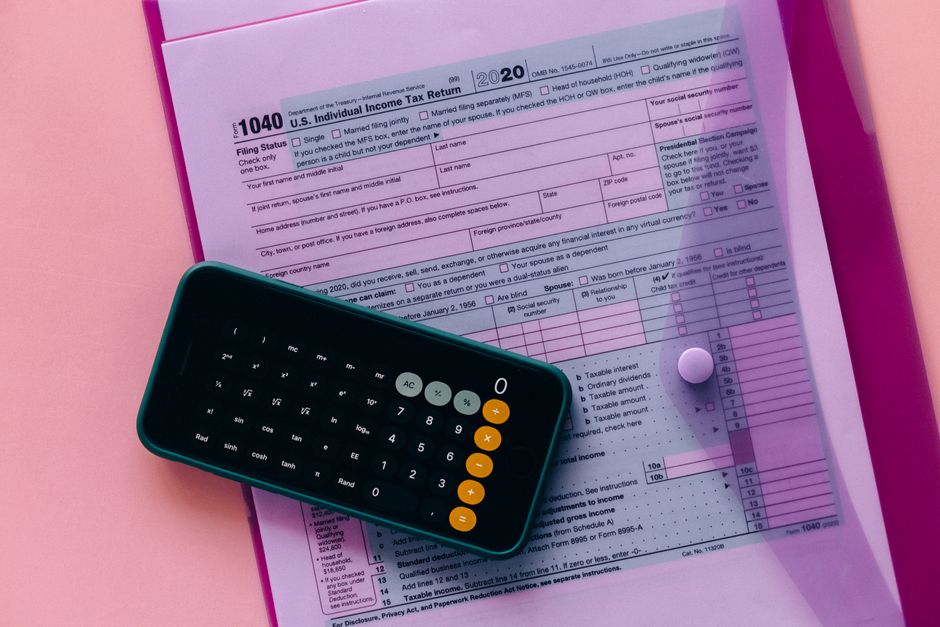
A Roth conversion is not the only way to get tax-free retirement income. Consider these options if the conversion math doesn’t work.
Mega Backdoor Roth. If your 401k plan allows after-tax contributions and in-plan Roth conversions, you can contribute up to $70,000 total (2026 limit, including employer match and pre-tax deferrals). This is better than a standard Roth conversion because it uses 401k space and avoids the pro-rata rule entirely. Check with your HR department. Fidelity-administered plans often allow this.
Health Savings Account (HSA). Contributions are pre-tax, growth is tax-free, and withdrawals for medical expenses are tax-free. After age 65, you can withdraw for any reason penalty-free (ordinary income tax applies). An HSA is strictly better than a Roth IRA for medical expenses. Max contribution for 2026: $4,300 (self) or $8,600 (family).
Taxable brokerage account. If you’re in the 0% or 15% long-term capital gains bracket, a taxable account can be more efficient than a Roth conversion. You pay tax on dividends each year (15% for most high earners), but you control when you realize gains. No contribution limits. No required minimum distributions.
Verdict: For most high earners, the Mega Backdoor Roth is the best option if available. The HSA is second. A standard Roth conversion is third — use it only when the tax math clearly favors it.
Disclaimer: The information on this page is for educational purposes only and does not constitute financial advice. Rates, terms, and eligibility requirements are subject to change. Always compare multiple lenders and consult a licensed financial advisor before borrowing.