Understand Your True Mortgage Cost Over the Full Term
When budgeting for your home, it’s vital to look beyond the monthly mortgage payment and understand the full long-term cost. Many buyers fixate on the sticker price or the rate for a quick glance, but the real story is in the details over 15, 20, or 30 years.
Fixed vs. Adjustable-Rate Realities
- Fixed-rate mortgages lock in your interest rate for the entire term. This predictability means your principal and interest won’t change, even if rates soar. Great for peace of mind but sometimes come with higher starting rates.
- Adjustable-rate mortgages (ARMs) usually offer a lower initial rate, but after a set period—typically 5, 7, or 10 years—the rate can adjust up (or down) depending on the market. If rates spike, your payment could jump significantly.
Action step: Think about how long you plan to stay in your home. If you’re settling for decades, a fixed rate may save you money and headaches over time. If you plan to move in 5 to 7 years, an ARM could offer short-term savings.
Interest Paid Over 15 vs. 30 Years (Calculator Examples)
Using a simple $300,000 mortgage at 6% interest for illustration:
| Term | Monthly P&I Payment | Total Interest Paid | Total Cost (Principal + Interest) |
|---|---|---|---|
| 15 years | $2,531 | $155,570 | $455,570 |
| 30 years | $1,799 | $347,817 | $647,817 |
See how the monthly payment drops with a 30-year term, but you pay more than double in total interest? The choice depends on your cash flow and long-term goals.
Property Taxes, PMI, and Homeowners Insurance Trends 2026–2035
Don’t forget these ongoing costs in your budget:
- Property taxes: National averages rose about 3–5% annually over the past decade. Expect similar inflation through 2035, especially as local governments adjust taxes after property value changes or renovations.
- PMI (Private Mortgage Insurance): Usually required if your down payment is under 20%. This can add $100–$300 monthly and sometimes sticks around longer than you expect.
- Homeowners insurance: Insurance rates have crept up due to natural disasters and inflation. Budget a 2–4% annual increase through 2035 to be safe.
Refinancing Windows and Rate Buydown Considerations
Keep an eye on refinancing opportunities. With fluctuating rates, you might:
- Refinance to a lower fixed rate or shorter term when market conditions align.
- Consider a rate buydown—paying upfront points to lower your ongoing interest rate, which can save thousands if you plan to stay long-term.
Pro tip: Always run a break-even analysis before refinancing. The closing costs versus monthly savings equation tells you how long it will take to recoup fees with lower payments.
Action Steps:
- Use mortgage calculators to compare fixed vs. adjustable rates for your timeline.
- Factor in rising property taxes, PMI, and insurance in your budget projections.
- Watch for refinancing windows and consider rate buydowns if it makes financial sense.
Understanding these layers now helps prevent nasty surprises later. Your mortgage isn’t just a number on a loan document—it’s a financial journey that needs careful planning.
Map Out Your Renovation Timeline and Phases
Planning your renovation timeline is key to keeping your budget on track. Break it down into three phases:
- Immediate (0–2 years): Focus on urgent repairs and structural issues like foundation fixes or roof leaks. These are must-dos before anything cosmetic.
- Mid-term (3–10 years): Upgrade key systems such as plumbing, electrical, and HVAC. These can improve your home\’s efficiency and comfort without rushing.
- Long-term (10–20+ years): Cosmetic updates like painting, flooring, and landscaping come last. These refresh your home\’s look but don’t impact its core.
Use a priority matrix to decide what goes first:
Structural → Systems → Cosmetic. This approach prevents costly delays and rework.
To stay organized, create a rolling 10-year renovation roadmap. Update it yearly based on your home\’s condition, budget, and lifestyle changes. This phased renovation plan helps you spread costs wisely and avoid surprises down the line.
Calculate the Real Cost of Renovations (Not Just Contractor Quotes)
When planning your renovation budget, it\’s easy to focus only on contractor quotes—those are just the hard costs like materials and labor. But don’t overlook soft costs: design fees, permits, inspections, and project management. These can add up quickly.
Breakdown: Hard vs. Soft Costs
- Hard costs: Flooring, cabinets, plumbing, electrical, labor.
- Soft costs: Architect or designer fees, permit costs, insurance, and sometimes temporary housing.
Inflation Adjustment for Materials & Labor (2026–2035)
Materials and labor prices tend to rise over time. Industry reports suggest a steady inflation increase of about 3–5% annually over the next decade, sometimes more during supply shortages. Factor this into your budget, especially if your renovation spans several years, to avoid surprises.
Contingency Fund: Your Safety Net
Set aside 15% to 30% extra of your total renovation cost as a contingency fund. The older your home, the higher the buffer should be—unexpected issues often pop up in older properties, like hidden water damage or outdated wiring.
Watch for Hidden Costs
- Permits: Often required and can be costly, depending on the work and locality.
- Temporary housing: If you need to move out during major work, budget for this.
- Storage fees: Storing furniture or belongings to clear the space.
- Financing fees: Loan origination, appraisal costs, and closing fees if you finance the renovation.
Accounting for these factors upfront ensures your renovation budget is realistic and helps you avoid debt traps or delays halfway through your project.
Choose the Right Renovation Financing Strategy

When planning your mortgage and renovation budget, picking the right financing option matters a lot. Here’s a quick look at common choices in 2026, with pros, cons, and how they impact your long-term debt-to-income (DTI) ratio.
| Financing Option | Pros | Cons | 2026 Interest Rates (Approx.) | Impact on DTI |
|---|---|---|---|---|
| Cash | No extra debt or interest | Ties up liquidity | N/A | No impact |
| HELOC | Flexible borrowing; lower interest | Variable rates; risk if rates climb | 6.5%–7.5% | Increases DTI when drawn |
| Home Equity Loan | Fixed rates; predictable payments | Closing costs; slower approval | 7.0%–7.8% | Fixed increase in DTI |
| Cash-Out Refinance | Low fixed rates; resets mortgage terms | Higher closing costs; resets clock | 6.0%–6.8% | Raises DTI; may extend mortgage |
| Renovation Loans (Fannie Mae HomeStyle, FHA 203k) | Bundled mortgage + renovation; single loan | Stricter qualification; fees | 6.2%–7.0% | Adds to mortgage DTI |
Key Points to Consider:
- Cash is ideal if you want no new debt but only if you have the funds without draining savings.
- HELOCs offer flexibility, but variable rates mean your payments can rise.
- Home equity loans have steady fixed payments, good if you want consistency.
- Cash-out refinancing lets you tap your equity at mortgage rates but means restarting your mortgage clock.
- Fannie Mae HomeStyle and FHA 203k loans combine mortgage and renovation funds; good if you qualify and want one payment.
How Financing Options Affect Your Debt-to-Income Ratio Long Term:
- Using any loan increases your monthly liabilities, so your DTI ratio goes up.
- Variable-rate loans like HELOCs can cause payment spikes, raising DTI unpredictably.
- Cash out refinance can increase your mortgage balance and monthly payment over the long haul.
- Renovation loans wrap everything into one mortgage, keeping monthly payments consistent but higher.
Choosing the right option depends on your financial situation, renovation scope, and how stable you want your monthly payments to be over 15–30 years. Always factor in rising interest rates in 2026 and beyond when budgeting.
Build the Master Long-Term Budget (Step-by-Step Framework)
Creating a solid long-term mortgage and renovation budget isn’t complicated if you follow these clear steps.
Step 1: Establish Baseline Monthly Housing Costs
Start by listing your fixed monthly expenses: mortgage payment (including principal and interest), property taxes, homeowners insurance, and PMI if applicable. Don’t forget utilities and any HOA fees. This gives you the base of your ongoing housing costs.
Step 2: Layer in Phased Renovation Cash Flow
Add your renovation spending in phases—immediate, mid-term, and long-term projects. Break these down by year to avoid surprises. Use your phased renovation plan to include estimated costs for each stage, keeping a realistic cash flow picture.
Step 3: Add Sinking Funds for Maintenance & Replacements
Set aside monthly amounts for big maintenance items with predictable lifespans like the roof, HVAC systems, water heater, and appliances. For example:
- Roof replacement fund
- HVAC servicing/replacement fund
- Appliance updates
This “sinking fund” approach helps smooth out large expenses without derailing your budget.
Step 4: Stress-Test for Life Events
Consider possible life changes: job loss, additional family members, or retirement.
- What happens to your budget if income drops?
- Can renovation plans pause or scale back?
- Are your emergency funds enough?
Plan for worst-case scenarios to keep your budget resilient.
Step 5: Annual Review & Rebalancing Process
Your budget isn’t set in stone—review it every year. Update for:
- Changes in property taxes or insurance rates
- Completed renovation phases
- Material and labor cost inflation
- Adjust sinking funds based on repairs done
This keeps your long-term home budget realistic and flexible.
Free Google Sheets/Excel Template Walkthrough
To make this simple, use a free Google Sheets or Excel mortgage and renovation budget template. It:
- Tracks monthly costs and renovation phases
- Includes sinking fund calculations
- Allows you to run “what-if” scenarios like interest rate hikes or unexpected repairs
I’ve found this helps keep everything organized and easy to update, no matter your renovation timeline.
Following this framework makes managing your mortgage and renovation budget easier, less stressful, and more predictable over the years.
Essential Sinking Funds Every Homeowner Forgets
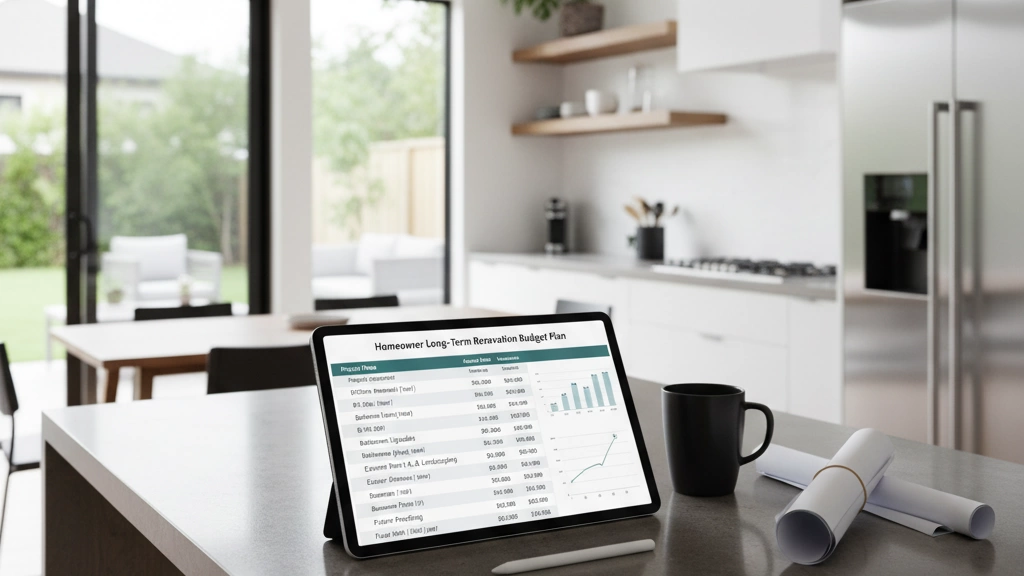
When managing a long-term mortgage and renovation budget, sinking funds are a must—but many homeowners overlook them. These are hidden costs that come up on a predictable cycle, so setting aside money regularly helps you avoid financial stress later.
Here are the key sinking funds you should include:
-
Roof, siding, and windows (15–30 year cycles)
These big-ticket items don’t fail overnight. Plan for replacements or major repairs every 15 to 30 years, depending on material and climate. Setting aside a small amount monthly helps spread the cost over time.
-
HVAC, water heater, electrical panel
Systems like heating, ventilation, air conditioning, water heaters, and electrical upgrades typically last 10–20 years. They can be costly to fix or replace, so add these to your long-term budget.
-
Appliance package replacement
Kitchen and laundry appliances don’t last forever. Think about a 10–15 year replacement cycle and budget accordingly. Buying all at once can be a shock without savings.
-
Exterior painting, driveway, landscaping
Maintenance like painting the exterior, driveway resurfacing, and landscaping aren’t just cosmetic—they protect your home’s value and structure. These often need attention every 5–10 years and should be factored into your rolling renovation plan.
By including these essential sinking funds in your overall mortgage and renovation budget, you’ll build a more realistic, inflation-proof plan for homeownership over the next 20 years.
Tax Implications and Smart Deductions
When budgeting for your mortgage and renovation, don’t overlook tax impacts—they can save or cost you more in the long run.
Home Office and Energy-Efficiency Credits (2026 Updates)
If you’re working from home, the home office deduction can help reduce your taxable income. Keep clear records of the space and expenses related to it. Also, in 2026, new energy-efficiency credits are available for upgrades like solar panels, insulation, and efficient heating systems. These credits can cut your renovation costs significantly—so factor them into your budget.
Capital Improvements vs. Repairs
Know the difference: capital improvements are upgrades that add value or extend your home’s life (like a new roof or remodeled kitchen). These can increase your home\’s tax basis, potentially lowering capital gains tax when you sell. On the other hand, repairs (like fixing a leak or repainting) are usually not tax-deductible but are necessary for upkeep.
How Renovations Affect Property Taxes Long-Term
Major renovations often mean your property’s assessed value will rise, leading to higher property taxes over time. It’s smart to check local assessment rules before budgeting. Some areas reassess annually, while others do it less frequently, but either way, expect property tax increases after big improvements. Planning ahead will help you avoid surprises and keep your long-term budget realistic.
How to Protect Your Budget When Life Changes
Life throws curveballs, so your mortgage and renovation budget needs a safety net. Start by building a 6–12 month house emergency fund. This fund covers your mortgage, property taxes, insurance, and basic home maintenance if your income gets tight. Think of it as your financial cushion during uncertain times.
Interest rate spikes can hike your monthly payments if you have an adjustable-rate mortgage or plan to refinance. To recession-proof your budget:
- Avoid maxing out debt limits.
- Keep enough cash flow to absorb rate increases.
- Consider locking in fixed rates when possible.
Major life changes like divorce, inheritance, or early retirement can seriously affect your housing costs and renovation plans. Here’s how to prepare:
- Reassess your budget and long-term homeownership goals quickly.
- Adjust renovation timelines if your cash flow changes.
- Look into refinancing or downsizing options if needed.
By planning for these events, you keep control over your budget and reduce the stress of unexpected shifts.
Tools, Calculators & Templates
When creating a long-term budget for your mortgage and renovation, using the right tools makes a big difference. Here are some top free and paid budgeting tools every homeowner should consider:
- Google Sheets & Excel Templates: Many free templates online let you track both your mortgage and renovation expenses over 20 years. Look for those that include categories for property taxes, insurance, and sinking funds.
- 20-Year Mortgage + Renovation Calculators: Downloadable calculators are great for seeing how your payments, interest, and renovation costs add up across two decades. They help you visualize cash flow and plan savings effectively.
For apps, some popular choices adapted for homeowners include:
| App | Purpose | Notes |
|---|---|---|
| YNAB | Budgeting & cash flow | Great for tracking irregular renovation expenses |
| Monarch | Net worth & spending overview | Helps monitor equity growth versus debt |
| Rocket Money | Bill tracking & savings | Useful for managing ongoing bills like PMI and insurance |
Using these tools lets you build a practical, long-term mortgage and renovation budget without getting lost in spreadsheets or confusing numbers. Start with a template, then layer in your numbers and revisit the data regularly to keep on track.