Step 1 – Understand Your Paystub (Don’t Skip This!)
Alright, before you get excited about your first paycheck, let’s take a quick but crucial detour—understanding your paystub. We’ve all been there: staring at those countless numbers and scratching our heads. Your paycheck isn’t smaller because HR hates you—blame taxes and deductions instead!
Gross Pay vs. Net Pay: What’s the Difference?
- Gross pay is the total amount you earned before anything is taken out. Think of it as the “sticker price” of your work.
- Net pay is what actually lands in your bank account—your “take-home pay” after deductions.
Common Deductions Explained
Your paystub will show a few standard deductions, such as:
- Federal and state taxes: The government’s cut for public services.
- Social Security: Helps fund retirement and disability benefits.
- Medicare: Covers some healthcare costs for retirees.
- 401(k) contributions: Money you put aside for retirement before taxes.
- Health insurance premiums: Your share of the monthly cost for medical coverage.
How to Read Your Paystub
Look for sections like:
- Earnings: Shows your gross pay and any overtime or bonuses.
- Tax Deductions: Lines for each tax type.
- Benefits Deductions: What’s been taken for insurance or retirement savings.
- Net Pay: The all-important number—you take this home.
(Pro Tip: If you want, find an annotated example paystub online or from your HR—visual aids make this way easier!)
What to Do If Something Looks Wrong
Mistakes happen. If your paystub shows:
- Unexpected deductions
- Incorrect hours or pay rates
- Missing benefits contributions
Don’t sweat it. Contact your HR or payroll department ASAP to get it sorted. Better to fix it now than later!
Do this today: Grab your most recent paystub or ask HR for a sample. Compare gross vs. net pay and list your deductions. You’ll feel way more confident next time payday comes around.
Step 2 – Track Exactly Where Your Money Needs to Go

Before setting up any budget, you need to know where your money actually goes each month. Breaking your expenses into categories helps you see the full picture clearly.
Fixed Essentials
These are the bills that stay about the same each month and must be paid no matter what:
- Rent or mortgage
- Utilities (electricity, water, gas)
- Transportation (car payments, public transit passes)
- Phone bill
- Insurance (health, car, renter’s)
- Debt payments (student loans, credit cards)
Variable Essentials
These costs change month to month but are still necessary:
- Groceries
- Gas or fuel
- Personal care (toiletries, haircuts)
Non-Essentials
This is your “fun money” or things you can cut back on if needed:
- Eating out or takeout
- Subscriptions (streaming, apps)
- Entertainment (movies, events)
Quick Expense Worksheet
Spend less than 10 minutes listing all your actual monthly expenses under these categories. Don’t guess—check bank statements or receipts if you can. This clear snapshot makes it easier to build a realistic budget based on your entry-level salary and avoid surprises later on.
Tracking your expenses accurately is the first step to mastering your budget and taking control of your finances from your first paycheck.
Step 3 – Choose a Budgeting Method That Actually Works for Beginners
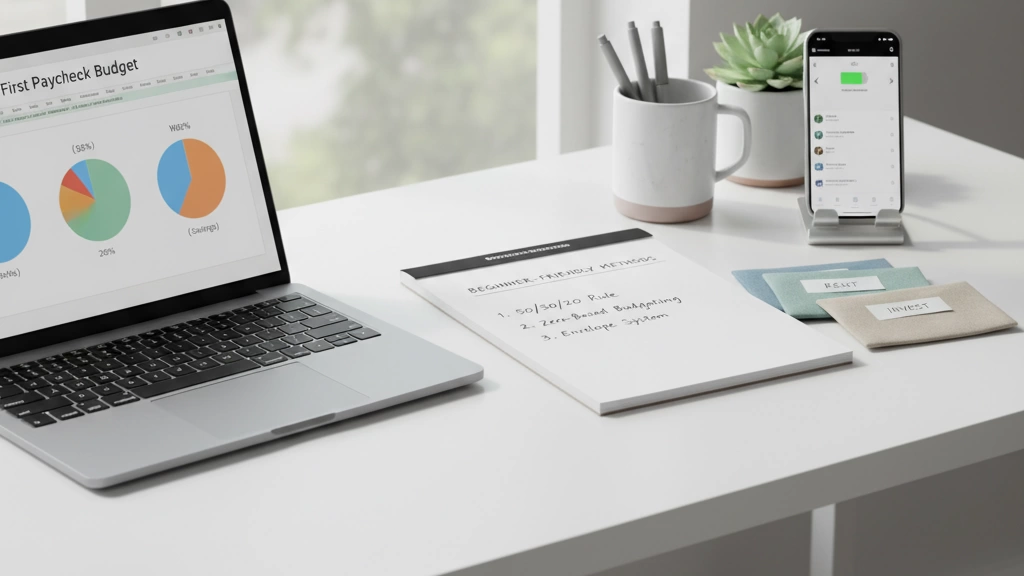
Picking the right budgeting style makes managing your first paycheck way easier. Here are three starter-friendly methods that fit most entry-level salaries:
1. The 50/30/20 Rule
- 50% Needs: Rent, bills, groceries
- 30% Wants: Eating out, subscriptions, entertainment
- 20% Savings/Debt: Emergency fund, loans, investments
Why it works: It’s simple and flexible, perfect for first jobs where you’re still learning money basics.
2. Zero-Based Budgeting
- Every dollar you earn gets an assigned job—no leftovers.
- You budget every expense and savings goal down to the last cent.
Good for: People who want tight control and want to avoid wasting cash.
3. Pay-Yourself-First (Reverse Budgeting)
- Put savings or debt payments first, then spend what’s left.
- Focus on building your emergency fund or investing from paycheck #1.
Great if: Saving or paying off debt is your top priority.
Quick Pros & Cons Table
| Method | Pros | Cons | Best for |
|---|---|---|---|
| 50/30/20 Rule | Easy, balanced, beginner-friendly | May be too general for tight budgets | Most first jobs |
| Zero-Based Budgeting | Full control, no waste | Time-consuming to set up | Detailed planners |
| Pay-Yourself-First | Builds savings fast | Limits spending flexibility | Savers, debt payers |
For entry-level salaries, the 50/30/20 rule often fits best—it’s flexible without being overwhelming. If you want something stricter, try zero-based or pay-yourself-first. Either way, the key is to pick a method you can stick with every month.
Step 4 – Build Your First Real-World Budget (Example Included)
Now that you know where your money goes, it’s time to build your first real budget. Let’s look at a realistic sample budget based on a $3,500 net monthly income – that’s close to the average take-home pay for entry-level jobs in 2025.
Sample Budget for $3,500 Net Income
| Category | Monthly Amount | Notes |
|---|---|---|
| Rent + Utilities | $1,200 | May vary depending on location |
| Groceries + Essentials | $400 | Food, personal care |
| Transportation | $250 | Public transport or gas |
| Phone + Internet | $100 | Basic plan |
| Health Insurance | $200 | If not fully covered |
| Debt Payments | $300 | Student loans, credit cards |
| Savings | $350 | Emergency fund & investing |
| Fun Money | $200 | Eating out, entertainment |
| Miscellaneous | $200 | Clothes, subscriptions |
Adjusted Budgets for Different Cities/Salaries
- $4,500 Net Income: More wiggle room, so consider boosting savings, paying down debt faster, or upgrading essentials like rent or insurance.
- $2,800 Net Income: Keep essentials tight, focus on essentials first, and lower fun money spending. Prioritize an emergency fund even if it means smaller contributions.
Easy-to-Use Template
To make things easier, I’ve put together an adjustable Google Sheets/Excel template you can download for free. It helps you plug in your own take-home pay, adjust categories, and track real spending. This way, you know exactly where every dollar goes—and you can revisit it each month to adapt as your salary or expenses change.
Download your first paycheck budget template here: [Insert link]
This step puts the 50/30/20 rule for beginners and zero-based budgeting into action, helping you get a clear picture of entry-level salary budgeting without the guesswork.
Step 5 – Handle Student Loans and Debt Without Panicking
Starting your first job often means facing student loans and other debts. The key is staying calm and having a plan.
Know your grace period: Most student loans give you a few months after graduation before payments start. Use this time wisely to budget and build a small emergency fund.
Check income-driven repayment plans: If your entry-level salary feels tight, these plans can lower your monthly payments based on what you earn, so you don’t get overwhelmed.
Balance debt and savings: Aim to put a realistic amount toward debt while still building an emergency fund (at least 1–3 months of essentials). For example, start by dedicating 10–15% of your net pay to debt and savings, adjusting as you go.
Think before refinancing or consolidating: Refinancing can lower interest rates but may mean losing federal loan protections. Only consider it when you have stable income and good credit.
Keep your debt manageable without skipping your emergency fund. This way, you protect yourself from unexpected expenses and slow but steady pays off your loans.
Step 6 – Start Saving and Investing From Paycheck #1
Starting to save and invest with your first paycheck might feel tough, but even putting away just $50 to $100 a month matters. Thanks to compound interest, that small amount can grow a lot over time without extra effort. For example, saving $100 monthly at a 7% annual return can turn into over $10,000 in 10 years.
Build an Emergency Fund First
Before diving deep into investing, focus on creating an emergency fund equal to 1 to 3 months of your essential expenses. This fund acts as your financial safety net in case of unexpected bills or job changes. It’s better to have this cushion before risking money in the market.
Roth IRA vs. 401(k): Which to Prioritize?
- 401(k): Often comes with employer matching contributions — that’s free money, so contribute enough to get the full match.
- Roth IRA: Offers tax-free withdrawals in retirement and more investment options.
If your employer matches your 401(k), start there. If not, or if you want more flexibility, opening a Roth IRA might be the better first step.
Best Free or Low-Cost Investing Apps for Beginners (2025)
Here are some easy-to-use investing apps that fit most entry-level salaries and budgets:
- Robinhood: Commission-free trading and simple interface.
- Acorns: Rounds up your daily purchases and invests the spare change.
- Stash: Great for beginners with educational content and low minimums.
- M1 Finance: Offers automated investing with customizable portfolios.
- Fidelity: No fees and a solid reputation for beginners.
Choose one that feels comfortable and start small — consistency beats timing the market. Remember, the best time to start saving and investing is now. Don’t wait!
Step 7 – Enjoy Your Money Without Guilt (Yes, Really)
After months of hard work, your first paycheck is a big deal. It’s okay—and actually important—to enjoy some of that money without feeling guilty. Setting aside a reasonable amount for “fun money” helps keep your budget balanced and your motivation high.
How Much to Spend on Fun Money
- Aim for 5–10% of your take-home pay as your entertainment or personal spending fund.
- For example, if your net salary is $3,500, around $175 to $350 a month is a fair and manageable amount.
- This lets you treat yourself without messing with essentials like rent, bills, or savings.
Affordable Ways to Celebrate Your First Paycheck
- Have a cozy dinner at home with some takeout.
- Try a new hobby or a local event with friends.
- Treat yourself to a small gift or upgrade something you use every day.
- Look for discounts, deals, or happy hours—celebrations don’t have to break the bank.
Avoid Lifestyle Creep as Your Salary Grows
Lifestyle creep is when your spending increases every time you get a raise—sometimes without realizing it. To dodge this trap:
- Increase your savings or debt payments first when your paycheck grows.
- Keep your essential and non-essential spending steady.
- Budget any “extra” money consciously instead of just spending it automatically.
Enjoying your money starts with planning for fun, not ignoring it. That way, budgeting doesn’t feel like a punishment—it’s just smart money management from your first paycheck onward.
Step 8 – Tools & Apps That Make Budgeting Brain-Dead Easy
Using the right tools can make budgeting your first paycheck way simpler. For 2025, here are the top 5 budgeting apps I recommend:
- YNAB (You Need A Budget): Great for zero-based budgeting and teaching you to give every dollar a job.
- Monarch: Easy to use with strong tracking for spending and investments.
- Rocket Money: Best if you want to track and cancel unwanted subscriptions automatically.
- PocketGuard: Perfect for beginners who want to see how much they can safely spend.
- Simplifi by Quicken: Combines spending tracking with easy goal-setting.
Free vs. Paid – What’s Worth It?
- Free apps like PocketGuard and Rocket Money offer solid features and can handle most basic budgeting needs.
- Paid apps like YNAB and Monarch come with more advanced tools, personalized guidance, and better automation. For your first paycheck, investing in a paid app can be a smart move if it keeps you consistent.
Automate Savings and Bill Payments
To avoid late fees and build your emergency fund without thinking about it:
- Set up automatic bill payments through your bank or app.
- Automate transfers to your savings account right after payday — this is part of the pay-yourself-first method.
By automating these steps, you make budgeting easier and less stressful—and it’s a great way to build good money habits from day one.
Step 9 – Common First-Paycheck Mistakes and How to Avoid Them
Getting your first paycheck is exciting, but it’s easy to slip up. Here are some common mistakes young professionals make—and how you can avoid them:
1. Blowing It All in the First Week
It’s tempting to celebrate your first pay with a splurge, but don’t spend everything right away. Set aside a budget for fun money and keep most of your paycheck working for bills, savings, and debt.
2. Ignoring Taxes or Side Hustles
Remember, your take-home pay isn’t your full salary—taxes and deductions matter. Also, if you have side hustles or freelance income, plan for the extra taxes that come with them. Not tracking this can lead to surprise bills later.
3. Forgetting Annual or Irregular Expenses
Some expenses don’t come every month—think car registration, insurance renewals, or yearly subscriptions like Amazon Prime. Make a list of these irregular costs so you don’t get caught off guard.
4. Lending Money to Friends/Family Too Soon
It\’s great to help loved ones, but lending money right away after starting your job can strain your own finances. Build your budget and emergency fund first before offering financial help.
By steering clear of these pitfalls, you’ll keep your budget solid and your financial stress low from paycheck #1 onward.
Step 10 – Review and Adjust Monthly (Your Budget Isn’t Set in Stone)
Your budget isn’t something you set once and forget. Make it a habit to review it every month. Here’s how to keep it working for you:
- When to review: Pick a consistent day each month—like payday or the first weekend—to check your numbers. It only takes 10–15 minutes.
- How to review: Look over your spending categories. See if you stayed within limits for essentials, savings, and fun money. Highlight areas where you overspent or saved more.
- Signs to adjust: Increase savings if you have leftover cash regularly or get a raise. Cut spending if you’re running short or debt is creeping up.
- Prepare for raises or job changes: When your income changes, update your budget to reflect new earnings. Set a plan to boost savings or pay extra on debt instead of instantly upgrading your lifestyle. This helps avoid lifestyle creep.
Remember, entry-level salary budgeting is flexible. Adjusting every month keeps you in control and ready for whatever comes next!