Step 1 – Define Your “Enough” (The Minimalist Money Mindset Shift)
Before you can embrace minimalist money habits, you need to define your “enough.” This means understanding what truly satisfies your life without chasing endless stuff or expenses. The minimalist money mindset shift isn’t about deprivation—it’s about clarity and intention.
Why Most Budgeting Fails
Traditional budgets often fail because they focus solely on numbers—not on why you spend. When budgets ignore your values, they become boring chore lists or strict rules that make you feel restricted or guilty. That’s why so many give up before seeing real change.
Find Your Personal Values and Financial Non-Negotiables
Start by exploring what really matters to you. Ask yourself:
- What brings me joy or peace?
- What am I willing to spend money on—no questions asked?
- What expenses feel like a burden or waste?
Try these simple exercises:
- List your top 5 life values: Family, health, learning, creativity, freedom… whatever lights you up.
- Identify money non-negotiables: Bills or habits that align with your values and must stay.
- Highlight financial “noise”: Expenses you suspect don’t add value.
Example Values-Based Spending Categories
Once you know your values, shape your budget around them. Here are sample spending categories tied to common values:
- Health: Gym membership, nutritious groceries, therapy sessions
- Connection: Date nights, gifts for loved ones, travel to see family
- Learning: Books, online courses, workshops
- Simplicity: Quality groceries, minimal wardrobe updates
- Freedom: Savings, emergency fund contributions, side hustle investments
When you spend according to your values, money stops being a source of stress and becomes a tool that supports your life—not controls it. That’s the heart of minimalist budgeting for beginners.
Step 2 – Track Every Penny for 30 Days (No Judgment)
Tracking every penny you spend for 30 days is a game-changer for anyone starting minimalist money habits. The key here is no judgment—this isn’t about beating yourself up over every coffee or subscription. It’s about understanding exactly where your money goes and spotting patterns.
Best Beginner-Friendly Tracking Tools and Apps (2025 Recommendations)
To keep things simple, use easy apps designed for beginners that don’t overwhelm you with features. Look for:
- Automatic expense tracking by linking your bank accounts (saves time)
- Simple categorization for your spending (groceries, bills, entertainment)
- Custom reminders to input cash transactions
- Clear dashboards showing your spending summaries
Many apps now have improved user interfaces and free versions without ads, making it easier than ever to stay consistent.
What You’ll Realistically Discover
When you track your spending, expect to learn things like:
- Small daily expenses adding up more than you thought
- Subscriptions or recurring charges you forgot about
- Spending habits that don’t align with your values
- Times you spend out of boredom or habit, not need
This honest snapshot helps you move from vague budgeting ideas to focused, values-based budgeting.
How to Do It Without Feeling Restricted
Tracking doesn’t mean cutting fun or feeling deprived. Keep these tips in mind:
- Don’t label “bad” spending—just log it. Awareness comes first.
- Use the data to adjust gradually, not overhaul overnight.
- Set a reminder to review your spending weekly, so nothing sneaks by.
- Think of this as a learning phase that empowers you to spend intentionally later.
Tracking your money mindfully is the foundation of money minimalism 101. It’s about conscious spending habits that fit your life — not about strict rules or sacrifice.
Step 3 – Declutter Your Finances Like You Decluttered Your Closet
Just like clearing out your closet, tidying up your finances brings clarity and saves money. Start by canceling unused subscriptions—many people unknowingly waste around $200–300 per month on services they no longer use. Look through your bank or credit card statements to spot these sneaky expenses.
Next, close dormant accounts and unused credit cards. They can drag down your credit score or attract unwanted fees. Keeping fewer accounts makes managing money simpler and reduces stress.
Finally, switch to fee-free banking. Many banks charge maintenance or transaction fees that add up over time. Moving to no-fee accounts means more of your money stays in your pocket, giving you more control over your minimalist budget.
This financial declutter checklist is a simple but powerful step to bring your money habits in line with a minimalist lifestyle.
Step 4 – Create a Stupid-Simple Budget (The Minimalist Way)
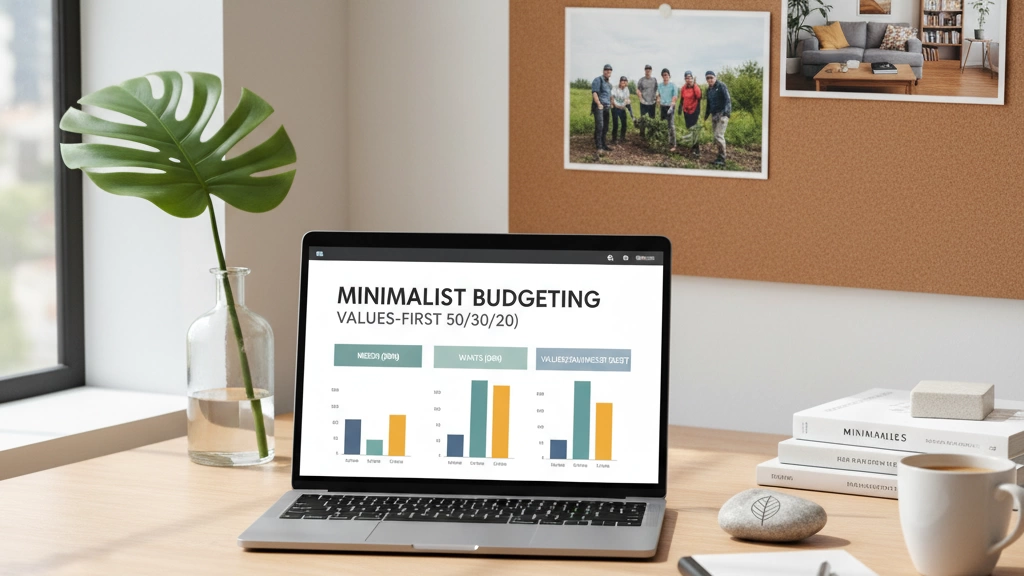
Now that you know your values and have a clear picture of your spending, it’s time to build a budget that’s easy to follow. Forget complicated spreadsheets or apps packed with features you’ll never use. Let’s keep it simple with a “Values-First 50/30/20 remix.”
What’s the “Values-First 50/30/20 remix”?
- 50% Needs: Essentials that align with your core values — rent, groceries, transport.
- 30% Wants: Intentional spending on things you truly enjoy but don’t overdo it.
- 20% Savings & Debt: The most important—pay yourself first by saving or paying off debt.
This budget focuses on values-based budgeting rather than rigid categories. You decide what “needs” and “wants” mean for you, so it feels less like restriction and more like mindful, purposeful spending.
Simple One-Page Budget Template
Keep it minimal: list your income at the top, then break it down into the three categories. Here’s a quick example:
| Category | Amount | Notes |
|---|---|---|
| Income | $X | |
| Needs (50%) | $X | Rent, groceries, bills |
| Wants (30%) | $X | Dining out, hobbies |
| Savings & Debt (20%) | $X | Emergency fund, debt payments |
Use this as a flexible framework, adjusting the percentages based on your lifestyle.
Pay Yourself First Rule
Before paying bills or buying anything, automatically set aside savings first. This ensures your savings or debt payoff doesn’t get pushed aside. It’s a core rule in minimalist personal finance tips and helps build financial freedom without thinking twice.
This minimalist approach helps you spend less without feeling deprived, sticking to your values while keeping money management stress-free.
Step 5 – Build a “No Questions Asked” Buy Delay Rule
One of the simplest ways to stop impulse buying is to give yourself a built-in pause before making a purchase. This “buy delay” rule helps you avoid spending on things you don’t really need.
Here are some popular approaches:
- 30-day rule: Wait 30 days before buying non-essential items. If you still want it after a month, consider purchasing it.
- 72-hour rule: Give yourself three days to think over the purchase. This is great for smaller buys.
- “Will I still want this in 10 days?” Ask yourself this question before hitting “buy.\” If the answer is no, skip it.
To keep this working smoothly:
- Set phone reminders when you spot something you want but aren’t ready to buy.
- Use a wish-list app or note system to save items mentally and review them later.
This simple habit encourages intentional spending and fits right into minimalist budgeting for beginners. It helps you slow down and focus on what truly aligns with your values, making spending less impulsive and more mindful.
Step 6 – Replace Spending Triggers with Free or Low-Cost Alternatives
Cutting back isn’t about giving up fun—it’s about swapping expensive habits with affordable or free options. Instead of retail therapy, try going for a walk, visiting your local library, or checking out free community events. These simple changes can satisfy the urge to “do something” without draining your wallet.
When it comes to eating out, meal planning is your best friend. Stick to recipes with 7 ingredients or less. It keeps cooking quick, simple, and budget-friendly, helping you avoid the temptation of takeout.
Here are real reader examples showing how small swaps make a big difference:
- “I replaced weekend shopping trips with morning walks in the park. It cleared my mind and stopped impulse buys.”
- “Switching weekends out for local free events gave me something to look forward to without spending a dime.”
- “Meal planning with a short ingredient list cut my grocery bill in half and made cooking way less stressful.”
By identifying your spending triggers and replacing them with low-cost alternatives, you build intentional spending habits that fit a minimalist lifestyle and keep your finances on track.
Step 7 – Automate Everything (Set It and Forget It)

Automating your money habits is a simple way to stick with minimalist budgeting for beginners without feeling overwhelmed. The idea is to set things up once and let them run quietly in the background.
- Auto-transfer to savings: As soon as you get paid, have a set amount automatically moved to your savings account. This “pay yourself first” move builds your freedom fund without you needing to think twice.
- Bill payments: Automate bills like utilities, rent, and phone so you never miss a due date. This helps avoid late fees and stress.
- Investments & debt: Set up automatic contributions to your investment accounts or your debt snowball payments to keep progress steady and hands-free.
Recommended Automation Tools in 2025
- Mint: Tracks spending and lets you automate payments.
- YNAB (You Need A Budget): Great for minimalists who want to customize budgeting and automation.
- Simple Bank: Fee-free banking with built-in automation tools.
- Acorns or Stash: For easy, automated micro-investing.
- Truebill: Tracks subscriptions and bills, helps cancel unused ones automatically.
Using these tools, you can maintain a values-based budgeting approach without feeling restricted or caught up in manual tracking—a perfect fit for anyone embracing money minimalism 101.
Step 8 – Start a Tiny “Freedom Fund” (Even $10 a Week)

A freedom fund is different from your emergency fund. While an emergency fund covers unexpected costs like car repairs or medical bills, your freedom fund is for small goals or treats that boost your well-being without guilt. Think of it as money you control fully—no strings attached.
Why start small?
- Even $10 a week adds up over time
- It builds a positive habit of saving
- Watching it grow gives you a real psychological boost and motivates you to stay consistent
Where to keep your freedom fund?
Opt for a place that’s easy to access but still earns some interest. For beginners in 2025, high-yield savings accounts are a smart choice with competitive rates.
| Account Type | Interest Rate (2025) | Access | Best For |
|---|---|---|---|
| High-Yield Savings Account | 3.5% – 4.5% APY | Easy withdrawal | Beginner savers |
| Money Market Account | 3.0% – 4.0% APY | Limited checks | Slightly higher balance |
| Online savings platforms | 3.6% – 4.7% APY | Mobile-friendly | Quick tech access |
Starting a tiny freedom fund is a simple but powerful step in your minimalist budgeting for beginners journey. It creates room for joy without sacrificing your values-based budgeting goals.
Step 9 – Review Monthly with One Simple Question
Set aside 15 minutes each month for a quick money date with yourself. This routine keeps your minimalist budgeting for beginners on track without feeling overwhelming.
Focus on just one simple question: “Did my spending make my life better?” This helps you stay aligned with your values-based budgeting and intentional spending habits. If the answer is yes, great! If not, identify what didn’t work.
Adjust without guilt—minimalist personal finance is about progress, not perfection. Use what you learn to tweak your conscious spending plan, cut out what no longer serves you, and keep building your slow spending movement. This monthly check-in is a powerful way to keep your simple living finances in balance.
Common Beginner Mistakes & How to Avoid Them

Starting minimalist money habits is great, but there are some common mistakes to watch out for.
Confusing minimalism with cheapness
Minimalist budgeting for beginners is about intentional spending, not just cutting every cost. Being cheap can leave you feeling deprived, while true money minimalism means spending on what aligns with your values and cutting what doesn’t.
Going too extreme too fast
Trying to overhaul your finances overnight often backfires. Slow spending movement is real—ease into new habits so they stick. Aim for steady progress, not perfection.
Ignoring relationships and social pressure
Your circle can influence your spending. Friends or family may not get your minimalist lifestyle right away. Set boundaries, communicate your goals, and don’t let social pressure push you into impulse buying or unnecessary spending.
By avoiding these common pitfalls, you’ll build a solid foundation for simple living finances that last.
How Long Until You Feel the Difference? (Realistic Timeline)
Changing your money habits takes time, but you’ll start seeing results sooner than you think. Here’s a simple breakdown of what to expect as you embrace minimalist budgeting for beginners and build intentional spending habits.
| Timeline | What to Expect | Key Focus |
|---|---|---|
| Week 1–4 | Awareness and small wins | Tracking spending, defining your “enough,” feeling in control, less impulse buying |
| Month 2–6 | Habit building and smarter choices | Sticking to your simple budget, automating savings, cutting waste, replacing spending triggers |
| Year 1 | Confidence and financial freedom | Solid emergency/freedom fund, steady debt paydown, true minimalist personal finance lifestyle |
Week 1–4: Starting Small
- Track every penny without judgment.
- Discover where your money really goes.
- Notice instant relief from mindless spending.
- Feel more intentional about your purchases.
Month 2–6: Gaining Momentum
- Cancel unused subscriptions, declutter finances.
- Automate bills and savings to reduce stress.
- Use your “buy delay” rule to avoid impulse buys.
- Replace costly habits with free or low-cost alternatives.
Year 1: Making It Stick
- Watch your freedom fund grow steadily.
- Feel less financial anxiety.
- Live comfortably within a values-based budget.
- Enjoy a simple living finances lifestyle without feeling deprived.
The slow spending movement isn’t about quick fixes — it’s about creating lasting habits that make your money work for you. Stick with these beginner steps, and over time, you’ll notice your wallet and your mindset both getting healthier.