
Most budgets fail because they feel like punishment. These seven creative budgeting challenges turn saving into a short experiment with a clear finish line. Pick one for the next seven days, then keep the rules that actually reduce spending in 2026.
Challenge 1: Give Every Dollar a Job for Seven Days
Start with a one-week spending plan, not a permanent lifestyle overhaul. The goal is to decide where your next dollars go before your habits decide for you. A seven-day window works because it is long enough to expose leaks but short enough to feel manageable.
Step 1: List the money available
Write down your checking balance, cash, and income arriving during the next seven days. Leave out your emergency fund and long-term savings. Then list fixed payments due before the challenge ends, such as rent, a phone bill, or a loan payment. Subtract those bills first. The remaining amount is your seven-day spending limit.
Step 2: Create four spending jobs
- Food at home and basic groceries.
- Transport, fuel, or public transit.
- Required personal spending, such as medicine.
- Fun money and small extras.
Put a specific amount beside each job. If you have $280 left, you might assign $90 to groceries, $45 to transport, $25 to personal needs, and $20 to fun. Move the remaining $100 to savings or debt repayment immediately. This challenge works best when the transfer happens before the week begins.
What makes this challenge work
You are not pretending surprise expenses do not exist. You are forcing every dollar to compete for a limited role. If the fun category reaches zero on Thursday, the answer is not to raid groceries. The answer is to pause optional spending until the next seven-day reset. That boundary creates the saving result.
Challenge 2: Run a No-Spend Weekend With Clear Rules
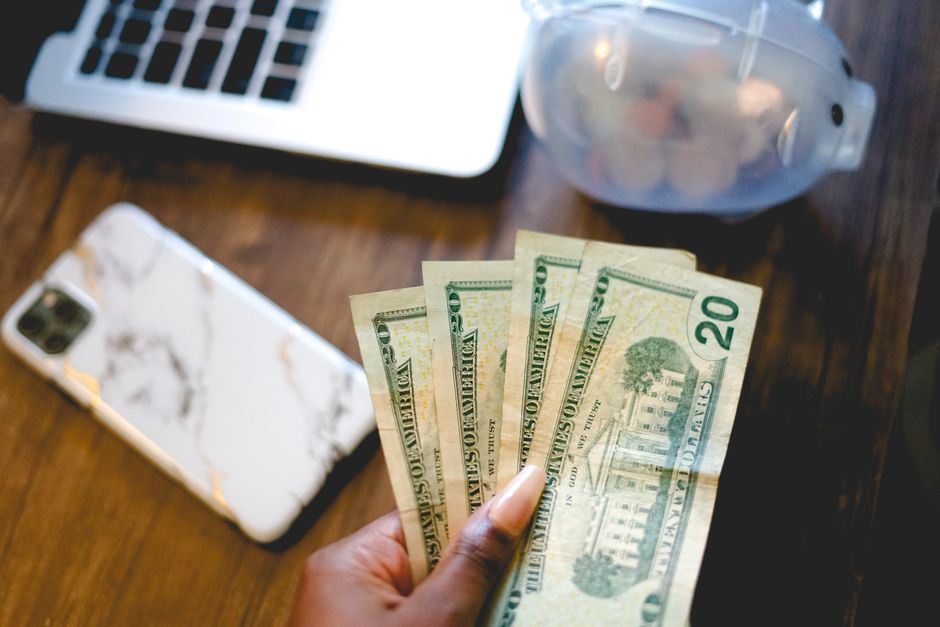
A no-spend weekend should remove optional purchases, not make normal life impossible. The winning rule is simple: spend only on safety, health, work, and commitments you cannot cancel. Everything else waits until Monday.
| Area | Allowed | Paused | Likely saving |
|---|---|---|---|
| Food | Food already at home | Takeout and delivery | $35-$80 |
| Entertainment | Free library or outdoor activity | Movies, games, paid events | $15-$60 |
| Transport | Work or essential travel | Unplanned driving | $10-$30 |
| Shopping | Urgent medicine | Clothes, home items, online orders | $20-$100 |
Prepare on Friday afternoon
Check the refrigerator, pantry, and freezer. Choose two breakfasts, two lunches, and two dinners from what you already own. Charge your phone, download a library book, and tell friends that you are hosting at home instead of meeting at a restaurant. Preparation matters because hunger and boredom create fast purchases.
Replace the spending trigger
Match each usual purchase to a free substitute. Replace coffee-shop visits with coffee from home, paid streaming rentals with a library film, and mall browsing with a walk. Keep a note on your phone called “money not spent.” Record every avoided purchase and its estimated cost. Do not claim savings for money you would never have spent.
The clear verdict: a no-spend weekend is best for people who make frequent small purchases. It will not solve a rent problem, but it can reveal the emotional triggers behind $8 drinks, $22 meals, and repeated convenience orders.
Challenge 3: Build a 90-Day Sinking Fund for Irregular Bills
Irregular bills feel like emergencies only when the budget ignores them. Car insurance, annual subscriptions, school costs, gifts, and home repairs are predictable by category even when the exact date changes. A sinking fund turns those costs into small weekly transfers.
Use the annual-cost formula
Add the expected cost for the next 12 months, then divide by 12 for a monthly target or by 52 for a weekly target. If car insurance costs $720, gifts cost $480, and annual subscriptions cost $240, the yearly total is $1,440. That requires $120 per month or about $27.70 per week. The weekly figure is easier for people paid weekly or paid irregularly.
Start with the bill that causes the most stress
Do not create ten sinking funds on day one. Pick one expense that repeatedly damages your budget. Set an automatic transfer for the amount below.
| Expense | Expected cost | 90-day target | Weekly transfer |
|---|---|---|---|
| Car insurance | $720 annually | $180 | $13.85 |
| Holiday gifts | $480 annually | $120 | $9.25 |
| Annual software | $240 annually | $60 | $4.62 |
| Home repairs | $600 annually | $150 | $11.55 |
These figures are examples, so replace them with your own bills. Keep the fund in a separate savings account or a clearly named budget category. The common mistake is treating the balance as spare cash. A car insurance fund is not available for a weekend sale. Its job is already assigned.
When to pause the challenge
Stop adding money temporarily if the transfer makes you miss a required payment or rely on a credit card for groceries. A sinking fund should reduce future borrowing, not create current borrowing. Lower the amount, extend the target date, or start with the single bill due soonest.
Challenge 4: Turn Grocery Shopping Into a Reverse Auction
Choose the meal first, then make every ingredient compete for the lowest practical cost. This challenge cuts waste because it starts with food you already own instead of a blank shopping list.
- Inventory the kitchen before opening a grocery app. Write down five ingredients that need to be used soon.
- Choose three meals that share at least two ingredients. Chicken, onions, rice, and frozen vegetables can become a stir-fry, soup, and rice bowl.
- Set a meal budget before shopping. A $45 limit is more useful than a vague promise to “spend less.”
- Compare unit prices, not package prices. A $4.50 package may cost more per 100 grams than a $6 package.
- Choose one cheaper substitute for every expensive ingredient. Use beans for part of the meat, frozen berries instead of fresh berries, or store-brand oats instead of branded oats.
- Remove one convenience item from the cart. Pre-cut fruit, single-serve snacks, and ready-made sauces often carry a large markup.
- Stop shopping when the budget is reached. Do not add a reward item at the checkout.
Set a useful target
A realistic first target is a 10% reduction, not a dramatic grocery cut that leaves you hungry. If your normal weekly shop costs $110, aim for $99. The $11 difference becomes $572 over a year if you repeat the result for 52 weeks. Track the actual receipt total, including delivery charges, tips, and taxes.
Know when not to use this challenge
Do not chase the cheapest price when a substitute creates waste or triggers another purchase later. Buying a large bag of salad that spoils is not a saving. For a one-person household, smaller packages can win even with a higher unit price. The clear winner is the plan that gets eaten.
Challenge 5: Test a Budgeting Tool for 14 Days Before Paying
Use a tool only when it changes an action. A colorful dashboard will not fix spending that has no limit. Test one system for 14 days, record transactions daily, and keep it only if it helps you make a decision before spending.
Which free tool is best?
Google Sheets is the best free choice for people who want total control. Create columns for date, merchant, category, amount, and planned amount. Add a weekly total at the top. It costs $0, works on a phone or computer, and makes irregular expenses easy to track. The tradeoff is manual entry.
Who should use an envelope app?
Goodbudget suits households that think in spending envelopes but want a phone-based system. Its free plan lets you test digital envelopes before paying. Use categories such as groceries, fuel, restaurants, and annual bills. It is a poor choice if you will not update transactions at least every two days.
When is a paid app justified?
YNAB is the strongest pick for someone who wants a rule-based plan and automatic account syncing. Its official pricing page currently lists $109 per year or $14.99 per month in US dollars, plus applicable tax; prices can change, so check the official pricing page before subscribing. Splitwise Basic is useful for shared household costs and has a free option, but it is not a full budget. The verdict is clear: start with Google Sheets, move to Goodbudget for envelopes, and pay for YNAB only if the structure saves more than the subscription costs.
Challenge 6: Create a Savings Scoreboard That Measures Actions
A savings scoreboard works better than a vague monthly goal because it measures behavior you can control. “Save $3,000” is an outcome. “Transfer $58 every Friday” is an action. Build the scoreboard around actions, then use the result as feedback.
Choose three numbers
Track the number of no-spend days, the number of planned transfers completed, and the amount of optional spending avoided. Keep the scoreboard visible on paper, a calendar, or a spreadsheet. Three numbers are enough. A crowded dashboard creates work without improving decisions.
Use points without lying to yourself
Give yourself one point for every planned savings transfer, one point for each no-spend day, and one point for cooking a meal from food already at home. Do not award points for refusing a purchase that was never planned. If you would not have bought the $70 jacket, leaving it in the store is not a $70 saving.
Review the pattern every Sunday
Look for the category that caused the most failed challenges. If restaurants keep breaking the plan, create a restaurant allowance instead of banning restaurants. If online shopping causes the problem, remove saved payment details and add a 24-hour waiting rule. If transport costs rise, compare a weekly transit pass with individual fares.
The best scoreboard rewards consistency, not perfection. A person who completes 10 of 12 planned transfers has a useful system. A person who creates a perfect chart and never checks it has decoration. Set a weekly target, record it in under five minutes, and change one rule at a time.
Challenge 7: Use a 24-Hour Purchase Gate for Every Nonessential
The strongest final challenge is also the simplest: no nonessential purchase gets approved in the same moment you discover it. Add the item to a list, write down the full price, and wait 24 hours. For purchases above $100, wait 72 hours.
What should go on the list?
Record the item, price, reason, and the budget category that will pay for it. “New headphones, $85, current pair hurts my ears, entertainment budget” is useful. “Want headphones” is not. The note makes the desire specific and exposes purchases that have no available category.
What happens after the waiting period?
Ask three questions. Can I pay in cash without moving money from bills or savings? Do I already own something that solves most of the problem? Will I still want this if the discount disappears? If the answer to the first question is no, do not buy it. A discount is not a saving when the purchase creates debt.
Use a replacement rule
For every approved purchase, remove one similar item or delay another purchase in the same category. This prevents a shopping challenge from becoming an accumulation challenge. The 24-hour gate is the best choice for impulse spending because it adds time at the exact point when emotion is strongest. It does not require a special app, a complex spreadsheet, or a perfect month. It requires one pause before payment.
Disclaimer: The information on this page is for educational purposes only and does not constitute financial advice. Rates, terms, and eligibility requirements are subject to change. Always compare multiple lenders and consult a licensed financial advisor before borrowing.
