Step 1: Get Your Financial Foundation Rock-Solid First
Before diving into investing, you need a strong financial base. Think of it as building your house on solid ground—without this, everything else is shaky. In 2025, here’s the exact order of operations you should follow to set yourself up right.
Priority 1: Build Your Emergency Fund (3–12 Months)
An emergency fund is your first safety net. How much you stash depends on your life situation:
- 3 months of essential expenses if you have a steady job and low risk of income disruption.
- 6 months for most people juggling family, bills, and some income uncertainty.
- Up to 12 months if you’re self-employed, have irregular income, or a job with high turnover risk.
When should you tap into this? Only for true emergencies like unexpected medical bills, car repairs, or sudden unemployment—not everyday expenses.
Priority 2: Pay Off High-Interest Debt (>7% Rule)
High-interest debt—think credit cards or payday loans with rates above 7%—is an investment killer. Always prioritize paying this down before investing heavily. Why?
- Paying off a 15% credit card balance is like earning a guaranteed 15% return by avoiding interest.
- Reducing this debt frees up more money monthly, giving you greater investing power later.
Priority 3: Grab Your Employer 401(k) Match — Free Money!
Once your emergency fund is set and high-interest debt is managed, don’t delay snagging your employer’s 401(k) match. This is literally “free money”:
- Many employers match contributions up to 3–6% of your salary.
- Missing this is like leaving a bonus check on the table every year.
Contribute at least enough to get the full match before you move on to other investing.
In short:
- Build a 3–12 month emergency fund depending on your situation
- Pay off any debt with interest rates over 7%
- Max out your employer’s 401(k) match—don’t miss out on free money
Once these steps are locked in, you’re ready to confidently add investing as a key part of your budget.
Step 2: Redefine Your Budget Categories to Include Investing
When you’re building a long-term financial budget, investing should be a fixed, non-negotiable expense—not just the money left at the end of the month. Think of it like your rent or groceries: paying yourself first means setting aside funds for investing right when you get paid.
Upgrade the 50/20/30 Rule for Investors
The classic 50/20/30 budget splits your income into needs, savings/debt, and wants. To smartly include investing, tweak it like this:
| Category | Percentage | Notes |
|---|---|---|
| Needs | 50% | Bills, groceries, essentials |
| Savings + Investing | 20–25% | Emergency fund, debt payoff + investing |
| Wants | 25–30% | Entertainment, dining, hobbies |
Try to push investing as part of the “Savings” bucket. If you can stretch investing closer to 20–25%, you’ll grow your portfolio faster without sacrificing daily needs.
Age & Risk-Based Investing Allocation
Your risk tolerance and investing strategy should shift with your age:
| Age Group | Recommended % Stocks | Bonds & Safer Assets % | Notes |
|---|---|---|---|
| 20s | 80–90% | 10–20% | Maximize growth, tolerate risk |
| 30s | 70–85% | 15–30% | Growth with moderate safety |
| 40s+ | 50–70% | 30–50% | More stability, preserve capital |
Adjust these based on how comfortable you feel with market swings. The goal is to balance growth and security as you age.
Including investing in your budget like any other essential cost — and aligning it with your age and goals — sets you up for financial success over the long haul.
Step 3: Determine How Much You Can Realistically Invest Each Month
Before you start investing, it’s important to figure out how much money you can comfortably put aside each month without stretching your budget. Here’s a simple way to do that:
-
Investable Cash Flow Formula:
Start by calculating your monthly income after taxes. Then subtract your regular expenses like rent, utilities, groceries, debt payments, and your emergency fund savings. What’s left is your investable cash flow — the amount you can realistically invest each month.
-
Paycheck Allocation Method:
A good rule of thumb is to aim for investing 20–25% of your net income. This benchmark balances saving for today’s needs and tomorrow’s growth. If that feels like too much at first, start smaller and work up.
-
The “Painless” Automation Trick:
Set up automatic transfers right after payday. Move your decided investment amount into your chosen accounts without even thinking about it. This way, investing becomes a non-negotiable expense, not “leftover money.” Most people miss this step—it’s the easiest way to stay consistent and avoid tempting yourself to skip or reduce investments.
By knowing your real investable amount and automating it, you make investing part of your budget — not just an afterthought.
Step 4: Choose the Right Investment Vehicles for Your Budget
Picking the right place to put your money matters. Here’s how to start, keeping your budget in mind:
Start with Tax-Advantaged Accounts
These accounts save you money on taxes, which means more growth over time. In 2025, know the limits to max out your benefits:
| Account Type | 2025 Contribution Limit | Key Benefit |
|---|---|---|
| 401(k) | $23,000 + $7,500 catch-up (50+) | Employer match + tax-deferred growth |
| Traditional IRA | $7,000 + $1,000 catch-up | Tax-deferred, may lower taxable income |
| Roth IRA | $7,000 + $1,000 catch-up | Tax-free growth, withdrawals tax-free |
| HSA | $4,150 individual / $8,300 family | Tax-deductible contributions + tax-free withdrawals for medical |
Low-Cost Index Funds & ETFs vs Individual Stocks
For most people, low-cost index funds or ETFs are the smarter pick. They spread your money over many companies, reducing risk and fees.
- Ideal if you want steady, long-term growth without watching the market daily.
- Individual stocks can yield big returns but are riskier and take more research.
Robo-Advisors: Hands-Off Investing Made Easy
If you prefer to set it and forget it, robo-advisors are a great match. They manage your portfolio automatically based on your goals and risk level. Here are the top 4 in 2025:
| Robo-Advisor | Fees | Key Features |
|---|---|---|
| Betterment | 0.25% | Goal-based, socially responsible options |
| Wealthfront | 0.25% | Tax-loss harvesting, financial planning tools |
| M1 Finance | Free | Customizable pies, fractional shares |
| SoFi Invest | Free | Automated investing + financial advice |
When to Consider Real Estate, Dividend Stocks, or Side-Hustle Reinvestment
These options can diversify your investing but require extra cash and effort:
- Real estate – Good if you want physical assets and rental income, but watch for upfront and ongoing costs.
- Dividend stocks – Provide steady income and possible growth but come with market risk.
- Side-hustle money – Reinvest extra earnings to boost your portfolio faster.
Choosing the right investment vehicles is about matching your budget, risk tolerance, and financial goals. Start with tax-advantaged accounts, lean on low-cost funds or robo-advisors, and add other options as your finances grow.
Step 5: Automate Everything – The Key to Long-Term Success
Automation is the best way to stay consistent with your investing without stress. Here’s the exact automation sequence that works well:
- From paycheck to accounts: Set your bank to move money right after payday. First, fund your emergency savings if needed.
- Accounts to investments: Next, automatically transfer a set amount to your investment accounts like your 401(k), IRA, or brokerage.
- Investments: Then, have the money buy your chosen funds or stocks without you lifting a finger.
This hands-off approach helps you avoid skipping months and takes advantage of dollar-cost averaging (DCA). DCA means investing the same amount regularly – you buy more shares when prices are low and fewer when prices are high. Between 2020 and 2025, this strategy proved reliable despite market ups and downs, smoothing out volatility and building your portfolio steadily.
For 2025, some of the best apps and brokerages to automate investing include:
- Betterment: Great for robo-advisors who want a hands-off, goal-based approach.
- M1 Finance: Offers customizable automatic portfolios combining the flexibility of picking individual stocks and ETFs.
- Vanguard: Perfect for low-cost index funds with easy automatic contributions.
- Fidelity: Known for strong customer service and a wide range of tax-advantaged accounts with automatic investment options.
Automating your investments takes the emotion and guesswork out of the game and keeps your long-term financial budget on track effortlessly.
Step 6: Adjust Your Budget as Life and Markets Change
Your financial situation and the markets won’t stay the same forever. That’s why it’s crucial to review your budget and investments at least once a year. Use an annual review checklist to keep things on track, and watch out for life-event triggers like marriage, having kids, or losing a job—these moments mean your budget needs an update.
When it’s time to rebalance your portfolio, do it carefully. The goal is to maintain your target investment mix without increasing your spending habits—this avoids lifestyle creep, where your expenses quietly rise just because your investments have grown.
To keep growing your investments without feeling the pinch, try raising your contributions by just 1–2% per year. This slow increase is easy to handle and can significantly boost your savings over time without ruining your monthly budget.
By staying flexible and making small adjustments, you’ll keep your long-term financial goals on track no matter what changes come your way.
Common Mistakes That Derail Budget-Conscious Investors
Even the best budgeting plans can go off track if you fall into some common traps. Here are mistakes to watch out for when incorporating investing into your long-term financial budget:
-
Investing money you’ll need in less than 5 years
Avoid putting cash you might need soon into the market. Short-term goals require safer places like a high-yield savings account or conservative investments. Investing this money risks losses you can’t afford.
-
Chasing hot stocks or crypto with bill money
Don’t use money earmarked for living expenses or bills to chase trendy stocks or cryptocurrencies. This is risky and can easily hurt your budget and financial stability.
-
Forgetting about taxes and fees
Investment returns get cut by taxes and fees, so always factor them into your budget. Overlooking these can make your plans overly optimistic and slow your progress.
-
Pausing investments during market dips
Market downturns are tough, but stopping your investments when the market dips means missing out when it rebounds. This often leads to lower long-term gains.
Avoiding these mistakes helps keep your investing consistent and aligned with your financial goals, making your budgeting efforts truly pay off.
Real-Life Examples & Case Studies
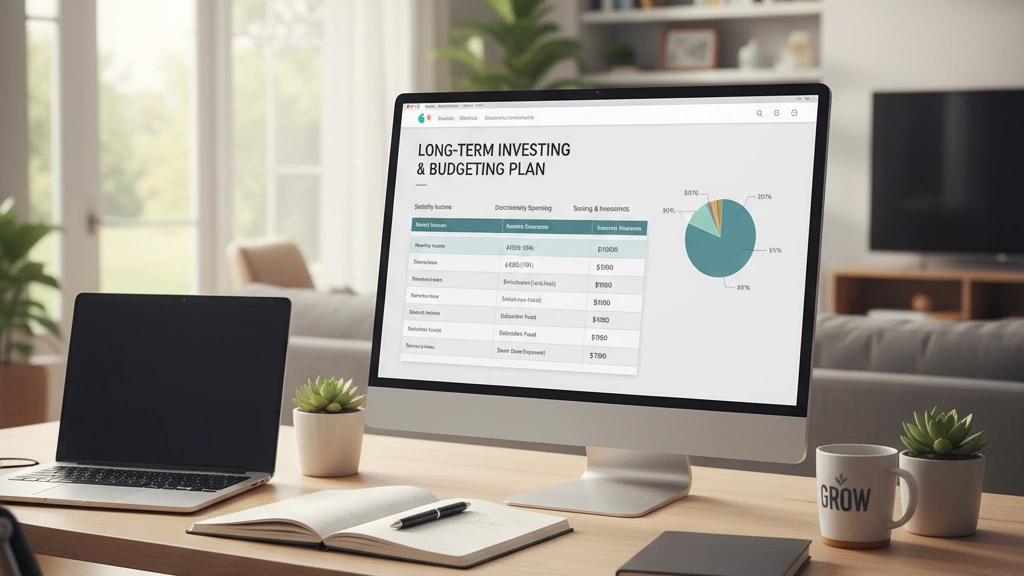
$55k Earner Investing 15% for 20 Years
Imagine someone earning $55,000 a year who commits to investing 15% of their income every month. That’s about $687 a month. Over 20 years, with a steady 7% average return, this consistent approach can grow into a substantial nest egg thanks to compound interest. Starting early and sticking to a plan really pays off.
Single Parent Starting with $200/Month
A single parent might start small, investing just $200 each month. Even though the amount seems modest, regularly putting money into low-cost index funds can build wealth over time. The key here is consistency and using tax-advantaged accounts like a Roth IRA to maximize growth and reduce taxes.
Couple in Their 40s Playing Catch-Up
Couples in their 40s often feel behind on investing. By reassessing their budget and prioritizing investing 20–25% of their net income, they can accelerate their savings. This may involve cutting back on non-essential expenses and automating contributions to maximize tax benefits in 401(k)s or IRAs. Even late starts can catch up if strategies are smart and disciplined.
These real-life cases show that no matter your income or situation, incorporating investing into your long-term budget is doable and effective when done right.
Your 12-Month Action Plan + Free Downloadable Worksheet
To make investing a solid part of your long-term budget, follow this simple month-by-month plan. It breaks down key steps so you stay on track without feeling overwhelmed.
Month-by-Month Checklist:
- Month 1-2: Build or top up your emergency fund (3–6 months of expenses).
- Month 3: Pay off any high-interest debt above 7%.
- Month 4: Sign up for your employer’s 401(k) match if available—grab that free money!
- Month 5: Redefine your budget to include investing as a must-pay expense.
- Month 6: Calculate your investable cash flow using our simple worksheet.
- Month 7: Set up automatic transfers for 20–25% of your net income to your investment accounts.
- Month 8: Open or adjust tax-advantaged accounts (401(k), IRA, Roth IRA) based on 2025 limits.
- Month 9: Choose your investment vehicles — low-cost ETFs, index funds, or robo-advisors.
- Month 10: Automate your contributions and start dollar-cost averaging.
- Month 11: Review your budget and investments, adjust allocations if needed.
- Month 12: Plan your next year: increase contributions by 1–2%, rebalance portfolio, and update emergency fund target.
Budget + Investing Tracker Template
Use our free downloadable tracker to stay organized—keeping tabs on:
- Monthly income and expenses
- Debt repayments progress
- Emergency fund balance
- Monthly investment contributions
- Portfolio asset allocation
- Yearly performance review
Tracking these regularly helps you avoid common mistakes like pausing investments during market dips or missing out on employer matches. Download the worksheet now and take control of your financial future, step by step.